Cat Behavior
How to Help Your Cat Transition to an Automatic Litter Box
Use this low-pressure transition plan to help your cat become comfortable with a new automatic litter box.
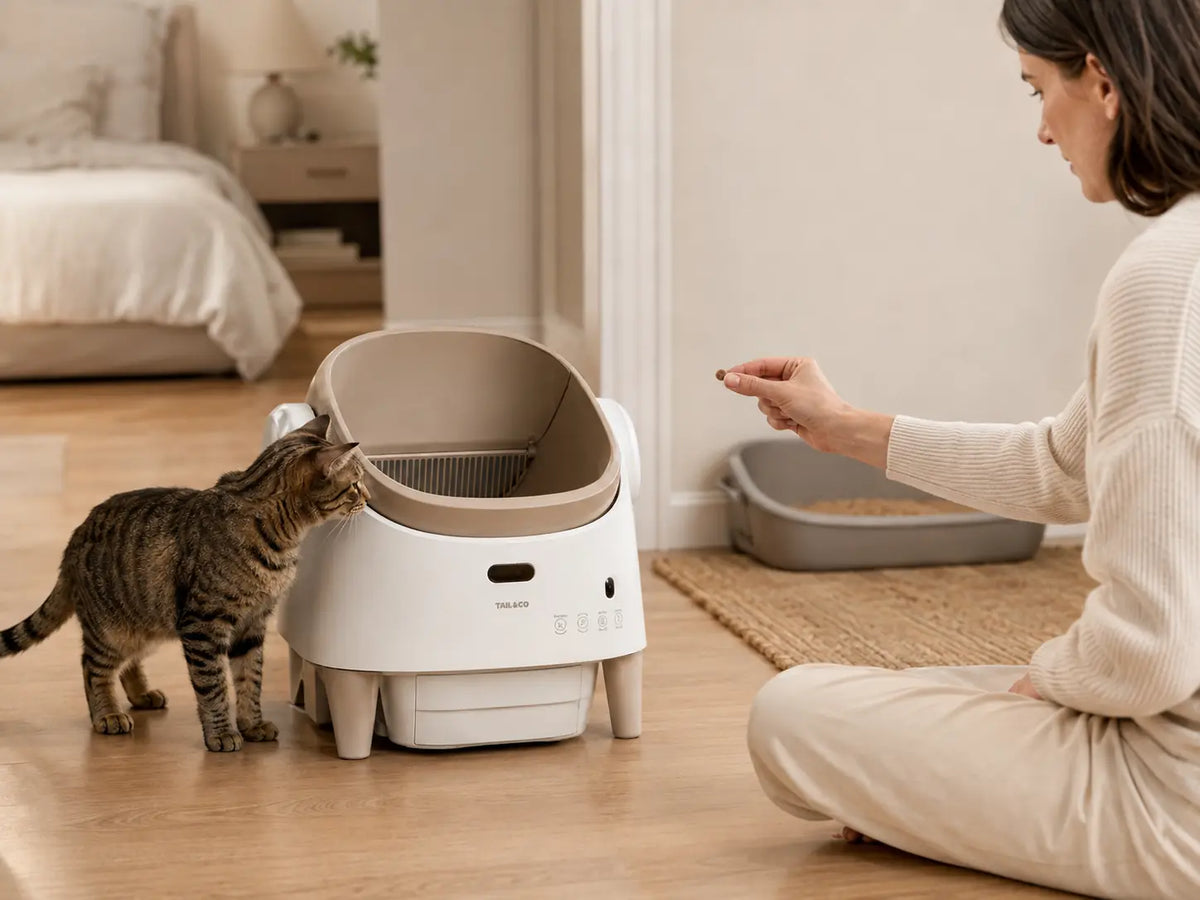
Cats notice changes in scent, sound, shape, and location. The fastest way to create hesitation is to remove the familiar box and turn on a moving device immediately. A better transition keeps the old routine available while the new box becomes familiar in small, calm steps.
Quick takeaways
- Begin with the new box powered off.
- Preserve familiar litter, scent, and location when possible.
- Move forward at your cat’s pace rather than on a fixed deadline.
In this guide
- Set up the new box beside the old one
- Make the litter feel familiar
- Reward curiosity, not performance
- Delay automatic movement
- Remove the old box gradually
Set up the new box beside the old one
Choose a quiet, accessible location and place the automatic box near the current tray. Leave it powered off. Allow your cat to inspect it without being lifted into it or forced toward the opening.
Make the litter feel familiar
Use a compatible litter with a texture your cat already knows, if the product allows it. A small amount of clean litter from the existing box can add a familiar scent. Keep the litter depth within the manufacturer’s fill line.
Reward curiosity, not performance
Offer calm praise, play, or a small treat when your cat approaches the new box. Keep food and water at an appropriate distance from toileting areas. Never punish accidents; stress can make the adjustment harder.
Delay automatic movement
Once your cat uses the new box consistently while it is off, run a manual cleaning cycle when the cat is in another room. This introduces the sound and motion from a safe distance. Gradually allow observation only if your cat remains relaxed.
Remove the old box gradually
When the new box has become the reliable choice, reduce the appeal of the old tray by cleaning it less frequently while keeping it usable. Remove it only after several days of confident use. Multi-cat homes may need a slower timeline and additional boxes.
Practical checklist
- Read age and weight guidance before use.
- Keep the automatic mode off at first.
- Avoid changing litter type and box style simultaneously.
- Watch for relaxed, repeat use.
- Pause or step back if your cat avoids the area.
Frequently asked questions
How long does the transition take?
Some cats adjust in days; others need several weeks. Personality, age, prior experience, and household activity all affect the timeline.
What if my cat refuses the new box?
Return to the last comfortable step, keep the familiar tray available, and check placement, litter texture, cleanliness, and access. Persistent toileting changes warrant a conversation with a veterinarian.
This article provides general educational information and is not veterinary advice. Contact your veterinarian about health, nutrition, or sudden behavior changes.
Create a calmer upgrade.
Explore the Tail & Co. Automatic Self-Cleaning Cat Litter Box →