Cat Care
How to Build a Consistent Feeding Schedule for Your Cat
Create a practical cat feeding schedule based on daily food amount, household timing, measured portions, and observation.

A useful feeding schedule is one you can follow every day. It begins with the correct total daily food amount, then divides that amount into meal times that fit your cat and household. Consistency matters, but the plan should still allow adjustments for age, health, food type, and veterinary advice.
Quick takeaways
- Set the total daily amount before setting individual meals.
- Use measured portions instead of guessing by sight.
- Change timing or food gradually when possible.
In this guide
- Start with the daily amount
- Choose realistic meal times
- Measure the feeder’s real output
- Transition without creating confusion
- Review the routine regularly
Start with the daily amount
Use the food label as a starting point and ask your veterinarian for guidance tailored to your cat’s body condition, age, activity, and health. Treats count toward daily intake. Do not let an app or feeder default decide the amount.
Choose realistic meal times
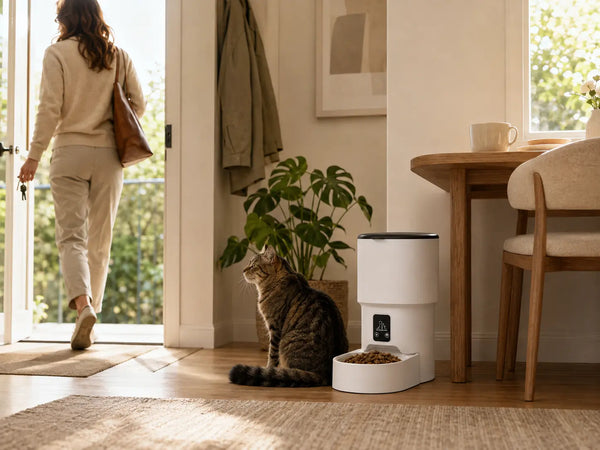
Pick times that remain stable on weekdays and weekends. Many households use morning and evening meals; others divide the total into smaller servings. An automatic feeder can handle early or midday portions without changing the daily total.
Measure the feeder’s real output
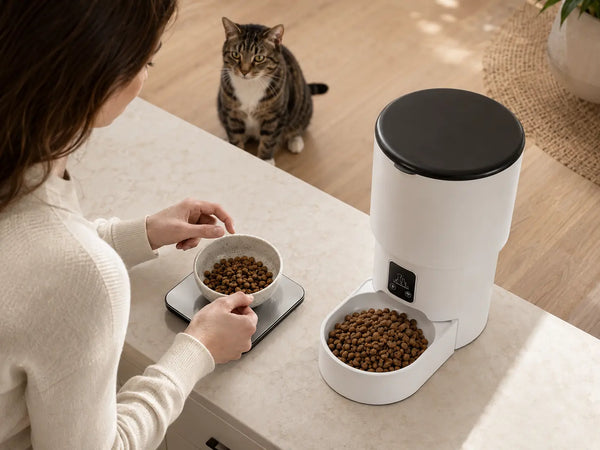
Portion numbers are not universal grams. Kibble size and shape affect how much falls. Dispense several test portions, weigh them, and calculate how the machine’s settings map to your plan. Recheck after changing food.
Transition without creating confusion
Shift meal times in small steps over several days. If your cat currently grazes, gradually reduce the amount left out while introducing scheduled meals. Keep fresh water available and monitor appetite, energy, and litter habits.
Review the routine regularly
Growth, aging, activity, medication, and food formulation can change nutritional needs. Reassess body condition and serving size with your veterinarian. Clean the bowl and feeder so the schedule remains hygienic as well as consistent.
Practical checklist
- Confirm total daily food with an appropriate professional.
- Choose repeatable meal times.
- Calibrate actual grams per feeder portion.
- Count treats and food from other household members.
- Review the plan after any food or health change.
Frequently asked questions
How many meals should my cat eat?
There is no single schedule for every cat. Age, diet, health, and household factors matter. Your veterinarian can help choose an appropriate frequency and total amount.
Can I use an automatic feeder for only one meal?
Yes. Many people keep hands-on morning and evening meals while using a feeder for a small midday or early-morning serving.
This article provides general educational information and is not veterinary advice. Contact your veterinarian about health, nutrition, or sudden behavior changes.