Apartment Living
How to Reduce Litter Box Odor in an Apartment
Practical ways to control litter box odor in small homes through placement, cleaning, litter depth, airflow, and waste containment.
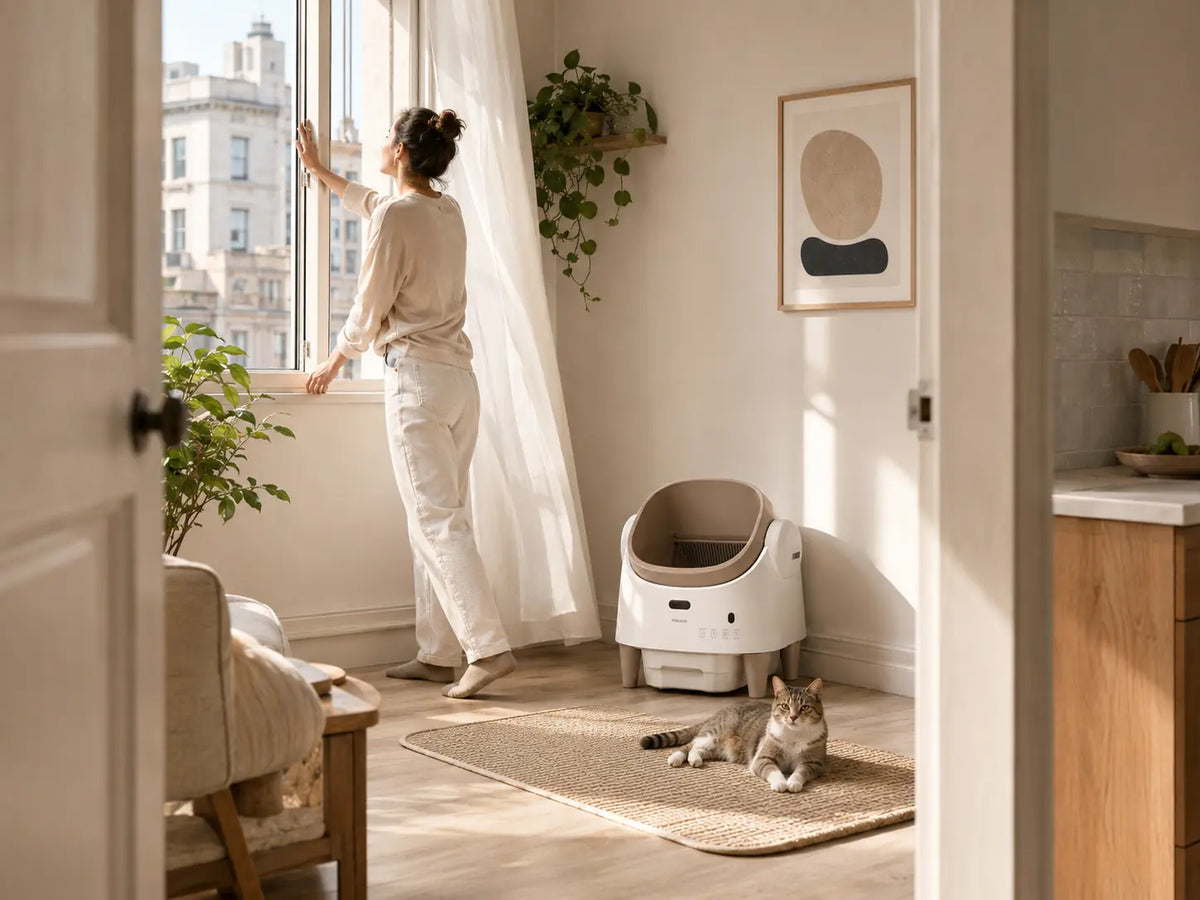
In a small home, litter box odor can travel quickly because there is less air volume and fewer places to separate the box from daily living. Fragrance alone rarely solves the problem. The most effective approach removes waste promptly, keeps surfaces dry, and creates a routine you can repeat.
Quick takeaways
- Prompt waste removal matters more than heavy fragrance.
- Good airflow helps, but the box must remain quiet and accessible.
- A clean waste drawer and correct litter level are essential.
In this guide
- Choose a practical location
- Remove the odor source quickly
- Use the right litter level
- Clean beyond the litter bed
- Improve the room, not just the box
Choose a practical location
Pick a low-traffic area with reasonable ventilation, stable flooring, and easy cleaning access. Avoid loud appliances, blocked corners, and places where another pet can trap the cat. The best location balances privacy for the cat with convenience for the person maintaining the box.
Remove the odor source quickly
Clumps and solid waste create most of the smell. Scoop a traditional box consistently or use an automatic cycle that moves waste into a contained drawer after visits. Empty the drawer before it is overly full; sealing old waste in a dirty liner will not make it disappear.
Use the right litter level
Too little litter can allow urine to reach the base. Too much may interfere with sifting or encourage tracking. Follow the fill guidance for your box and top up gradually. If changing litter, transition slowly so your cat continues using the box.
Clean beyond the litter bed
Wipe the entry, step, surrounding floor, drawer rim, and any contact points where dust or residue collects. Use cat-safe products approved for the unit and dry components fully before reassembly. Avoid strong scents that may discourage use.
Improve the room, not just the box
Vacuum tracked litter, wash nearby mats, and allow gentle air circulation. A small air purifier may help with airborne particles, but it does not replace waste removal. Keep the space dry, since damp litter and trapped moisture can intensify odor.
Practical checklist
- Empty waste before the drawer is packed.
- Keep litter at the recommended fill line.
- Wipe entry and surrounding floor regularly.
- Wash liners, mats, and removable parts as directed.
- Investigate sudden, unusual odor or toileting changes.
Frequently asked questions
Should I use scented litter?
Some households like it, but strong fragrance can be unpleasant to cats and may only mask odor. Cleanliness and timely waste removal are the foundation.
Can an automatic box make an apartment smell better?
It can help by moving clumps out of the open litter bed sooner, but results still depend on drawer care, litter compatibility, ventilation, and cleaning.
This article provides general educational information and is not veterinary advice. Contact your veterinarian about health, nutrition, or sudden behavior changes.