How To
How Often Should You Empty and Clean a Self-Cleaning Litter Box?
Use this practical daily, weekly, and deep-clean schedule to keep an automatic litter box fresh and dependable.
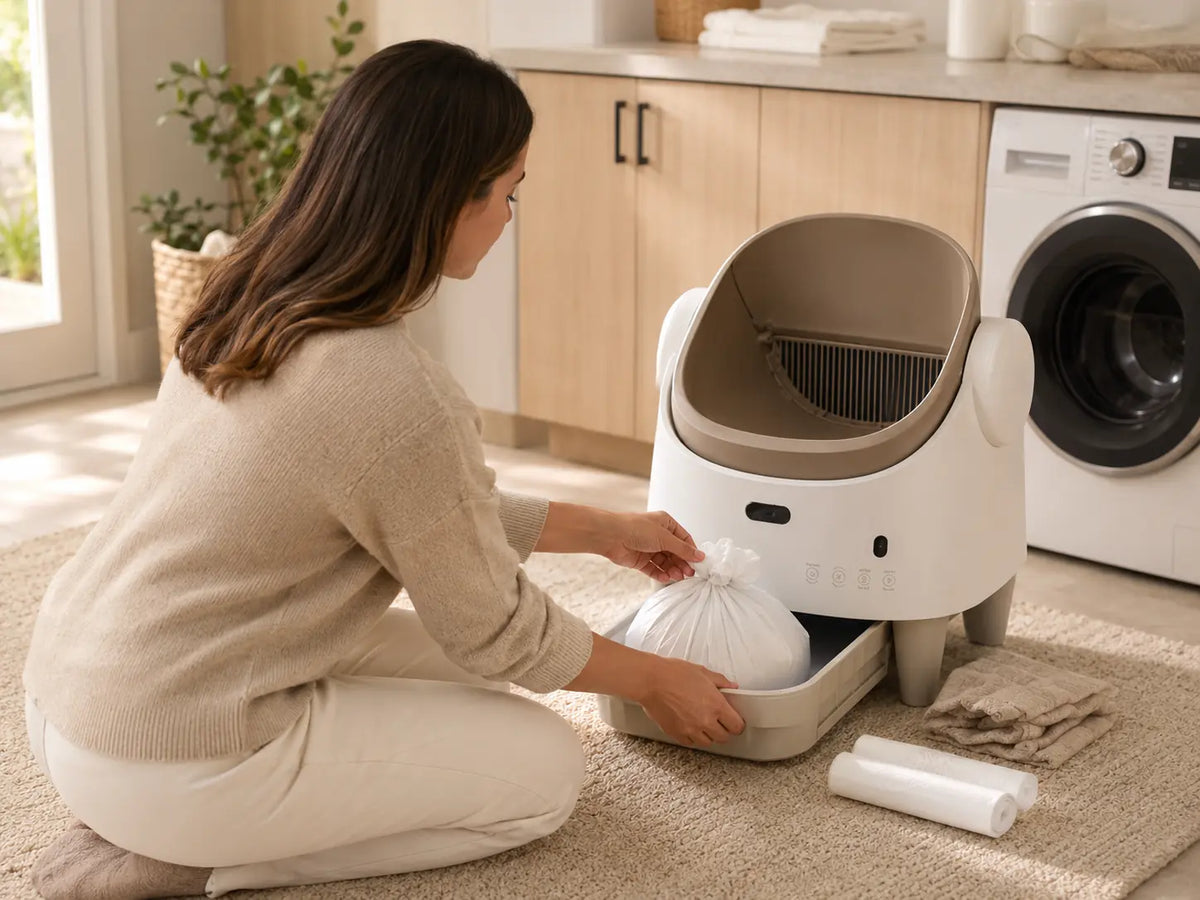
Self-cleaning reduces scooping; it does not remove maintenance. The best schedule combines quick daily checks with drawer emptying and periodic deep cleaning. Your exact timing will vary with cat count, usage, litter, humidity, and the product’s instructions.
Quick takeaways
- Inspect the litter bed and waste drawer every day.
- Empty based on actual fill level, not a maximum-day headline.
- Deep-clean only as directed and dry parts before reassembly.
In this guide
- Every day: perform a visual check
- As needed: top up litter
- Before full: empty the waste drawer
- Weekly: clean contact areas
- Periodically: complete a deeper clean
Every day: perform a visual check
Confirm the unit is powered and clear, the litter bed is level, and no clump is stuck where it should not be. Look at the entry, step, sensors, and drawer indicator if provided. A thirty-second check prevents small issues from becoming a failed routine.
As needed: top up litter
Automatic sifting gradually removes some litter with waste. Add compatible litter in small amounts and stay within the fill line. Overfilling can affect cycling; underfilling can reduce clumping performance and leave surfaces exposed.
Before full: empty the waste drawer
Do not wait for compressed waste or strong odor. Pull the liner, seal it, wipe the drawer rim if needed, and install a fresh liner correctly. Households with multiple cats will usually empty more often.
Weekly: clean contact areas
Wipe the entry, step, exterior, and approved interior surfaces. Remove tracked litter from under and around the unit. Use only products recommended by the manufacturer, since harsh chemicals or excess moisture may damage surfaces or deter your cat.
Periodically: complete a deeper clean
Power down and follow the manual for removing washable components. Do not submerge electrical parts. Allow everything to dry fully, then reassemble carefully and verify normal operation before returning to automatic mode.
Practical checklist
- Daily: inspect operation, litter level, and waste drawer.
- As needed: empty before overfilling.
- Weekly: wipe touch points and clean the surrounding floor.
- Periodically: deep-clean removable components.
- Always: keep sensors and moving clearances free of debris.
Frequently asked questions
Can I wash the entire unit with water?
No unless the manual explicitly says a component is washable. Electrical bases, motors, and connectors generally require different care.
Why does my drawer fill faster than the advertised estimate?
Cat count, body size, diet, litter type, humidity, and usage all affect capacity. Use your actual fill pattern to set the schedule.