Automatic Feeders
Automatic Cat Feeders: Benefits, Uses, and Who Needs One
Learn when an automatic cat feeder can make meals more consistent, what it cannot do, and which features matter most.
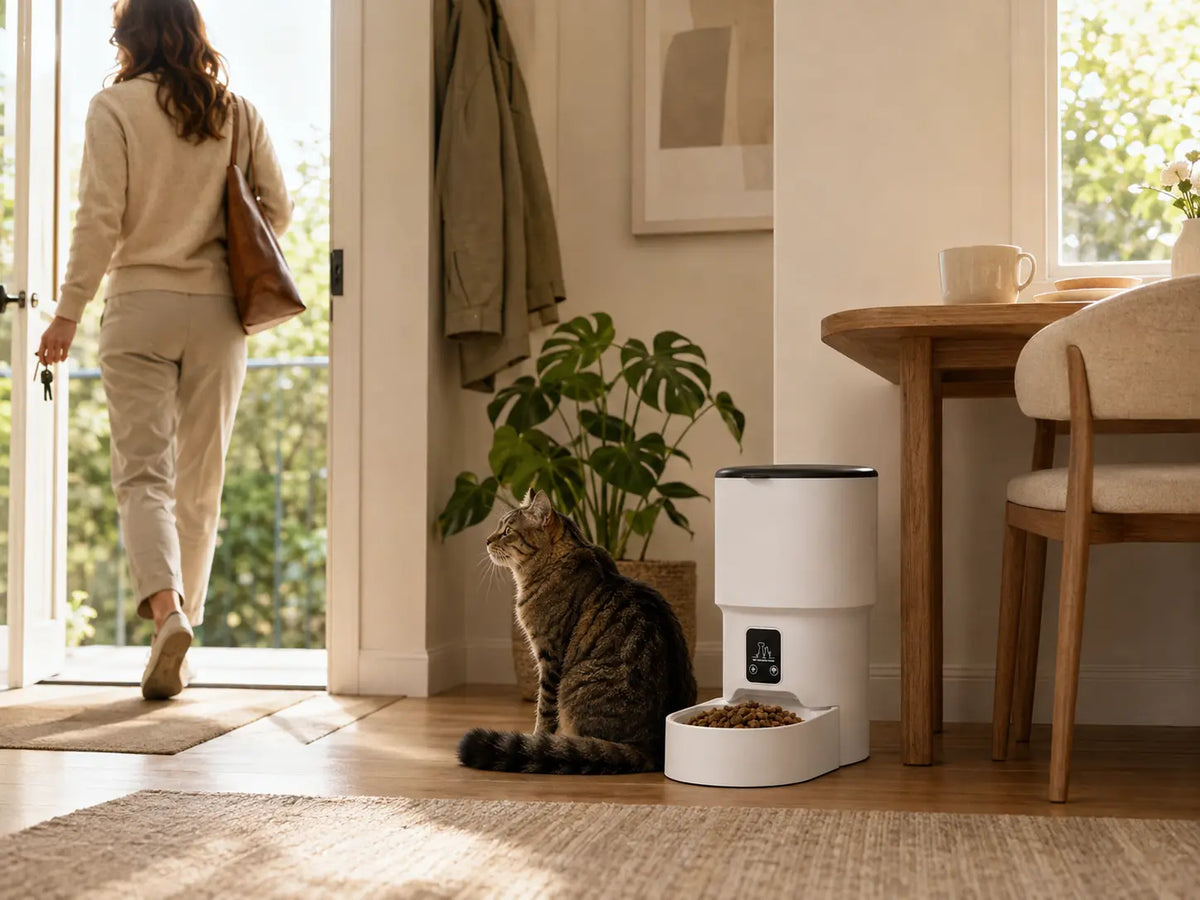
An automatic feeder can turn a feeding plan into a repeatable daily routine. It is especially useful when work, sleep, or travel makes manual timing inconsistent. The feeder handles scheduled portions; you remain responsible for food choice, setup, cleaning, and checking that your cat is eating normally.
Quick takeaways
- Scheduling creates consistency even when your calendar changes.
- Portion settings support a plan but do not determine the right diet.
- A feeder is a tool, not a substitute for daily observation.
In this guide
- Keep meal times predictable
- Support measured portions
- Feed when you are temporarily away
- Protect food freshness
- Choose features that solve a real problem
Keep meal times predictable
Cats often learn routines quickly. Scheduled dispensing can serve breakfast before an early commute, split a daily amount into smaller meals, or prevent irregular feeding caused by a busy evening. Predictability can also reduce the pressure of being the person who opens the bowl.
Support measured portions
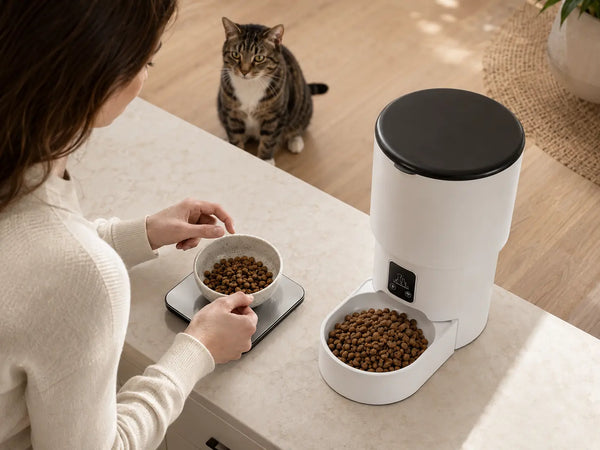
Instead of filling a bowl by eye, a compatible dry-food feeder dispenses configured portions. Portion units vary by machine and kibble shape, so weigh a few test servings with a kitchen scale before relying on the setting.
Feed when you are temporarily away
A feeder can cover meals during a long workday or short absence, but it should not be the only care plan. Water, litter, environment, device status, and your cat’s wellbeing still need human checks. Arrange responsible care whenever you are away.
Protect food freshness
A closed hopper can reduce exposure compared with an open bowl. Look for a secure lid, suitable seals, and removable food-contact parts. Store food according to its label and clean the hopper and bowl on the manufacturer’s schedule.
Choose features that solve a real problem
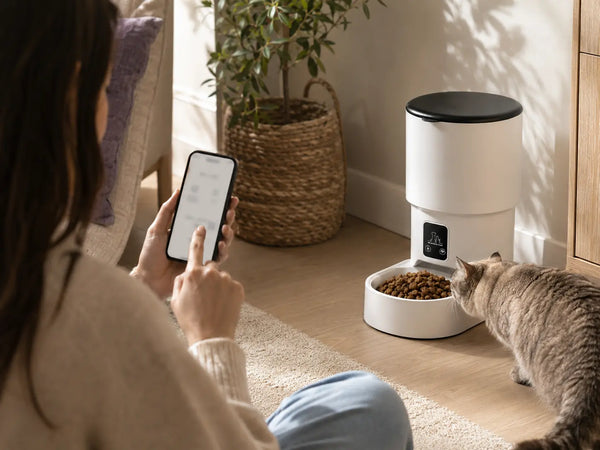
Wi-Fi control is useful if you want remote scheduling or status visibility. Backup power may protect meal timing during an outage. A low-food alert can reduce surprises. Prioritize dependable dispensing and easy cleaning over features you will never use.
Practical checklist
- Confirm the feeder is designed for your food type and kibble size.
- Measure test portions before regular use.
- Clean all food-contact parts as directed.
- Keep a daily eye on appetite and device status.
- Create a backup plan for outages or jams.
Frequently asked questions
Can an automatic feeder prevent overeating?
It can limit scheduled portions, but it cannot determine your cat’s nutritional needs or stop access to other pets’ bowls. Use a veterinarian-approved feeding plan.
Is Wi-Fi required for every automatic feeder?
No. Some use onboard controls, while connected models add remote scheduling and alerts. Choose based on how you will actually manage meals.
This article provides general educational information and is not veterinary advice. Contact your veterinarian about health, nutrition, or sudden behavior changes.