Buying Guide
Automatic vs. Traditional Litter Boxes: Which Is Right for Your Cat?
Compare daily upkeep, odor control, space, cat comfort, and cost before choosing between an automatic and traditional litter box.
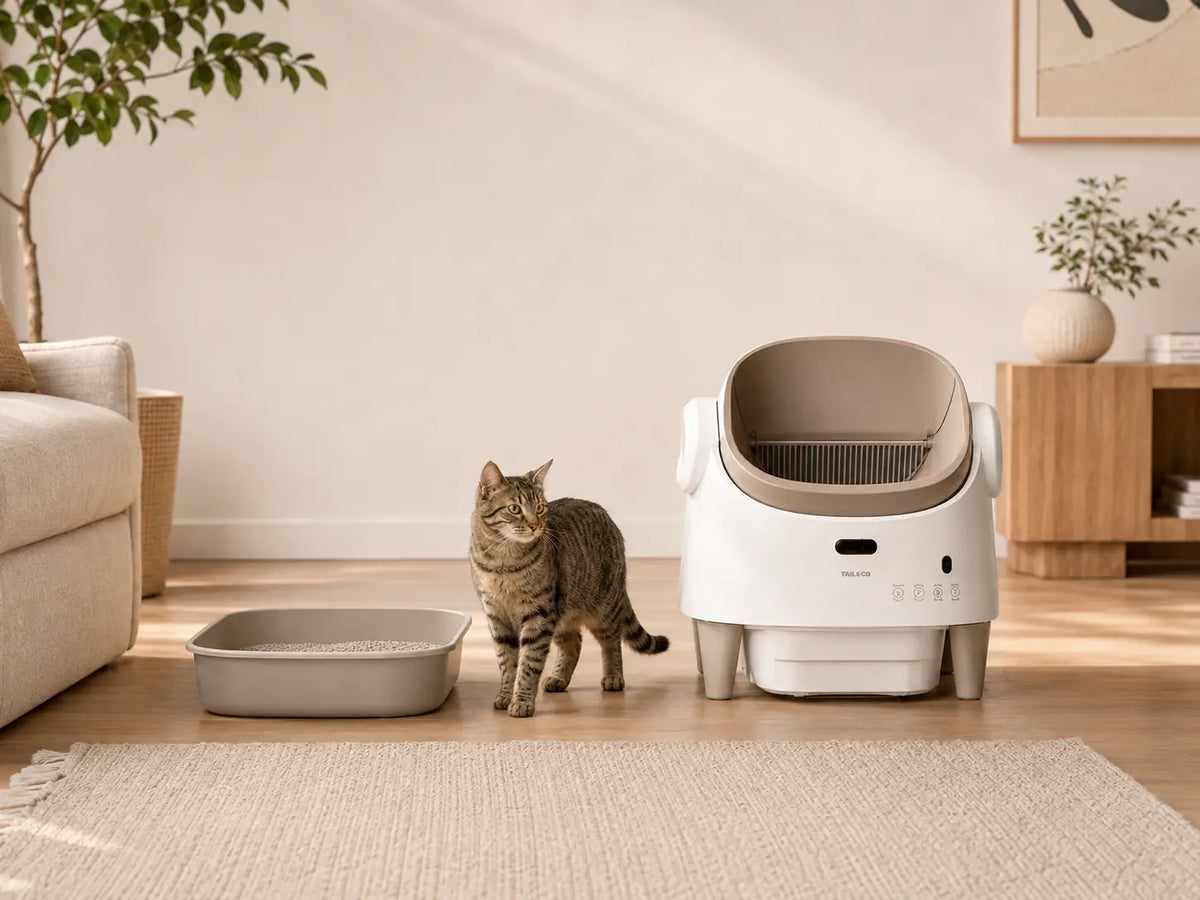
The best litter box is the one your cat will use comfortably and your household can maintain consistently. A traditional tray keeps things simple and inexpensive. An automatic box reduces repetitive scooping and contains waste between cleanouts. The right choice depends less on trends and more on your cat’s habits, your space, and the routine you can realistically keep.
Quick takeaways
- Traditional boxes offer a low starting cost and familiar setup.
- Automatic boxes can reduce daily scooping but still require regular drawer emptying and deep cleaning.
- A gradual transition matters more than the technology itself.
In this guide
- Start with your cat, not the feature list
- Compare the daily workload
- Think about odor at the source
- Measure your space before buying
- Compare long-term value, not only price
Start with your cat, not the feature list
Cats value easy access, stable footing, enough turning room, and a clean surface. A nervous cat, a kitten, a senior cat, or a cat with mobility limits may need a different setup from an active adult. Check the manufacturer’s age and weight guidance for any automatic model, and keep a familiar box available during the transition.
Compare the daily workload
A traditional box usually needs scooping at least once a day, plus litter top-ups and periodic washing. An automatic box handles the repeated waste-separation step after use, but it is not maintenance-free. You still empty the waste drawer, wipe sensors and surfaces, refresh litter, and perform deeper cleaning on schedule.
Think about odor at the source
Odor control begins with timely waste removal, suitable litter, ventilation, and a clean box. An automatic cycle can move waste into a contained drawer sooner than a once-daily scoop. A traditional box can also stay fresh when it is scooped consistently. Marketing claims cannot replace good placement and cleaning habits.
Measure your space before buying
Traditional trays fit more locations and are easier to move. Automatic boxes need floor area, access to power, clearance for the waste drawer or rotating parts, and a stable, dry surface. Measure the intended location, doorways, and the path you will use when emptying or washing the unit.
Compare long-term value, not only price
The purchase price is only one part of ownership. Consider compatible litter, liners or bags, filters if used, electricity, replacement parts, and the time saved from daily scooping. For busy households, the value may be a more consistent routine rather than a lower total cost.
Practical checklist
- Confirm your cat meets the model’s usage guidance.
- Measure the full footprint and service clearance.
- Check compatible litter and ongoing supplies.
- Plan a slow, low-pressure transition.
- Keep a backup box during setup or travel.
Frequently asked questions
Do automatic litter boxes eliminate cleaning?
No. They reduce repetitive scooping, but the waste drawer, interior surfaces, sensors, and litter bed still need routine care.
Can a multi-cat home use one automatic box?
It depends on the cats, product capacity, and how often the drawer is emptied. Many homes benefit from more than one litter location to reduce crowding and stress.
Ready to simplify the routine?
Explore the Tail & Co. Automatic Self-Cleaning Cat Litter Box →